

OXO Good Grips Microfiber Extendable Duster 52 inches
$ 4.54
Add To Cart
This extendable duster has a number of good points, and one relatively minor limitation.On the plus side, it complements the OXO hand duster quite well, accepting the same quality dusting sleeves as its little brother (you can read my review on the OXO hand duster here on Amazon) while at the same time allowing access to many (but not all …. see below) otherwise unreachable surfaces. The extending rod mechanism works well, and the angle between the rigid dusting sleeve at the end of the unit and the extended handle is essentially infinitely adjustable for maximum efficiency. I suppose it might be sufficient to just buy this extending rod version of the duster, with the idea that with the handle at its shortest one could use it in the same way as the standard OXO duster. I didn’t try this, but I believe the standard duster, also available from Amazon, might be more comfortable to use against easily reachable dust.One thing that annoyed me about this duster is that, in order to generate the rich variation of dusting angle mentioned above, the unit is designed with a kind of knob at the business end of the pole, and protruding out at right angles from the plane of the dusting tongue. I found that this knob is big enough that it gets in the way of trying to slide the unit – with the dusting sleeve fully extended at 180 degrees – between a bit piece of unmovable furniture and the wall, limiting my reach of long settled dust. I think I noticed on Amazon other versions of a kind of dusting pole arrangement that were simpler than the OXO, with perhaps no flexibility on dusting angle but also with no obstructing knobs. I may, in the end, try one of these alternative products to reach difficult spots in the house.In my review of the OXO hand duster, I included some details of my experiences and thoughts on washing and drying the dusting sleeves that are common the both OXO dusters. I’ve appended this discussion here, along with a picture of a custom, easy to make drying apparatus:To get more use out of the duster before it became saturated with dust, I used a rechargeable hand vacuum a couple times to get most of the dust off the duster. When that move seemed to have reached its limit, I swapped out the microfiber sleeve for a new one, which I had the foresight to buy in the same order as the duster. The simple snap that anchors the sleeve onto the handle is easy to work with and swapping is, indeed, a snap. This whole strategy went well and it is an approach I plan to continue to use. (Although purists might argue that unless the hand vacuum has a HEPA filter, vacuuming the dust from the sleeve while in the house might just end up redistributing some small dust particles. Just throwing that out there – I plan to continue to do the vacuuming, especially if the alternative is to stand on the porch and wack the dusty sleeve – it seems to me that is a recipe for redistributing dust, directly into your lungs!)I was surprised, when the duster arrived, that it is not cylindrical, but rather is a kind of dusting tongue. This actually is an advantage, since it means the tongue will reach into awkward places, like behind unmovable furniture, a little more easily (but note the concern above about the knob on the extender version of this duster).While the product literature stresses to only use hand washing and hand drying, I experimented a bit, with (so far) good results. I have a recently purchased LG top loading machine that does not have an agitator, and I guessed that this might be gentle enough, with cold water and a “delicate”, low spin speed setting, to not injure the fabric. This seems to have worked well. It got the sleeves free of dust, without causing any noticeable shedding of the bright orange microfiber. I actually wonder whether hand washing might even be less gentle, while at the same time clearing out less wash water than the low spin in the machine wash. One caution – if you do use the machine wash, the dust has to go somewhere, and that somewhere is your drain; I noticed that the replaceable lint filter I have on the drain tube was dirtier than it had been after I did a wash of four dust-rich dusting sleeves – but on the bright side it also contained no noticeable orange microfiber! Overall, I will continue to use the machine wash and live with more frequent changes in the drain filter, if it comes to that.For the drying, I had an inspiration that turned out to be quite productive. Thinking about how I was going to airdry the duster sleeves, I realized I could easily bend a standard, cheap wire shirt hanger to create drying frames that approximate the plastic loop of the duster unit that the fabric sleeve slides over. This was easily done with a couple of pliers to generate the Duster Sleeve Drying Frame (patent pending) shown in the photograph attached. There are two drying units shown: the one in the back is outfitted with two orange microfiber sleeves just out of the washing machine; the unit in the foreground is empty, so you can see how it was bent to accommodate two sleeves. In this design the hanger hook is left intact so it can be used on a pole like a standard hanger. The side prongs for attaching the sleeves are angled upward as much as possible to limit the possibility that the sleeve might slide off – although this did not seem to be a problem, presumably because I left the wire loop wide enough that the fit was snug. (I note that this idea will work well if two washed sleeves are attached; with only one attached it will dip down and the sleeve is perhaps more likely to drop off.) After hanging like this overnight in the laundry area of the basement, the sleeves were dry, very fluffy, and ready to go at it once more. And again, no noticeable shedding of the microfiber.
Related products
-
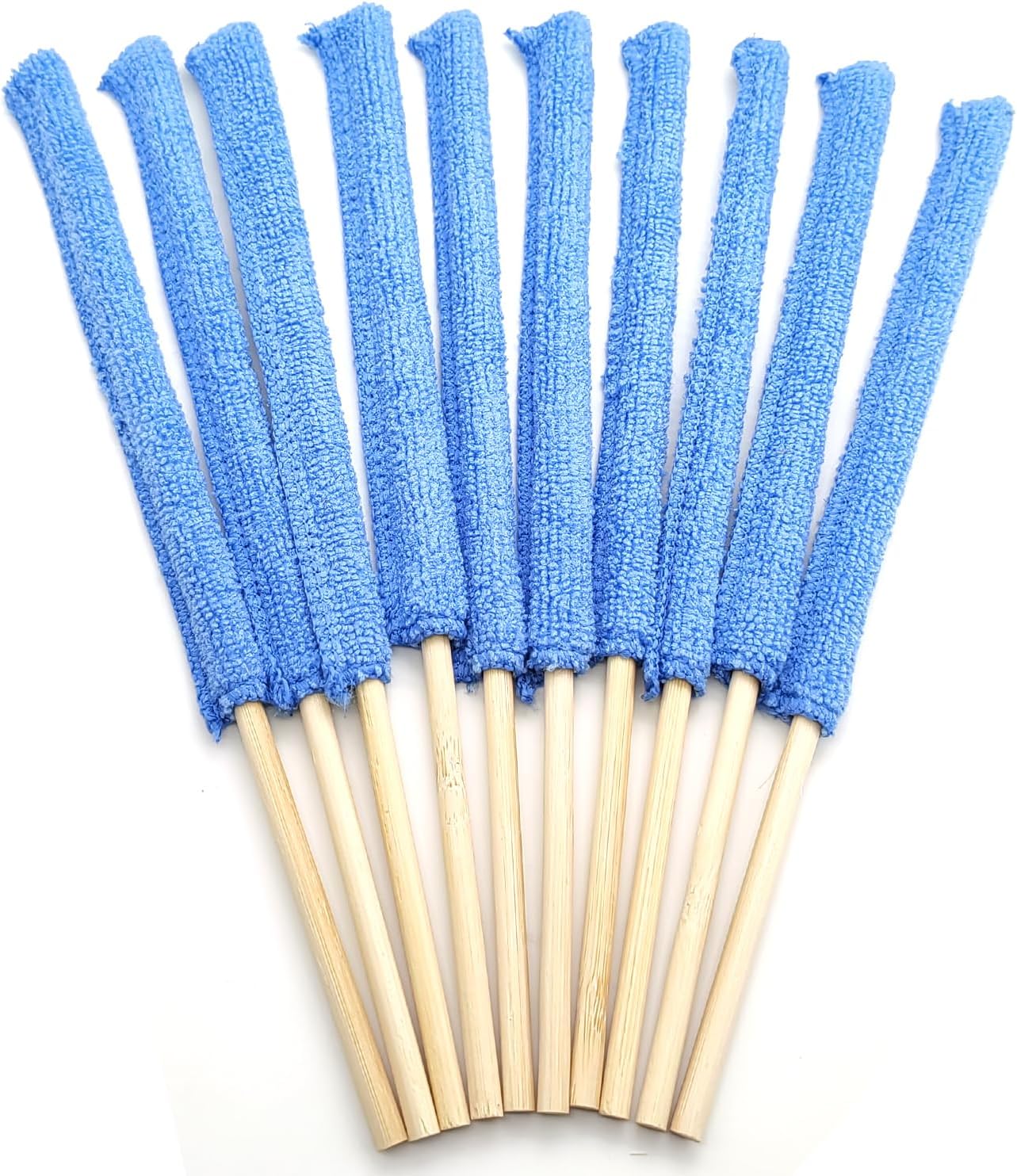
10PCS Mini Detail Dusters for Cleaning, Microfiber Detail Duster Sticks, Crevice Cleaning Tool Brush, Gap Dust Cleaner for Cleaning Home Car Vent Window Fan Blind
-
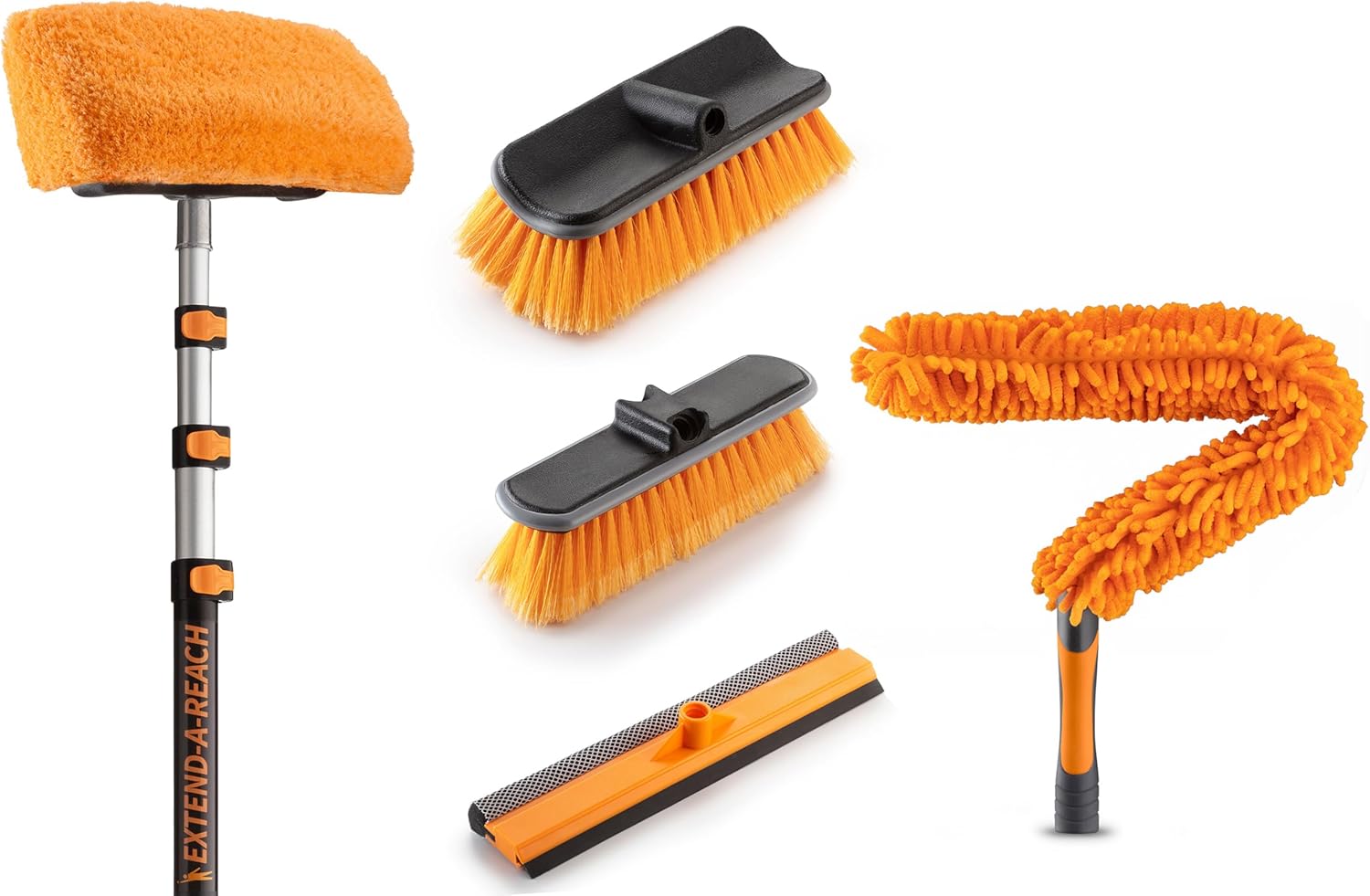
36 Foot Exterior House Cleaning Brush Set & Flexible Ceiling Fan Cleaner Duster with 7-30 ft Extension Pole // Vinyl Siding Brushes with Telescopic Extendable Pole & Window Cleaning Squeegee Tool
-
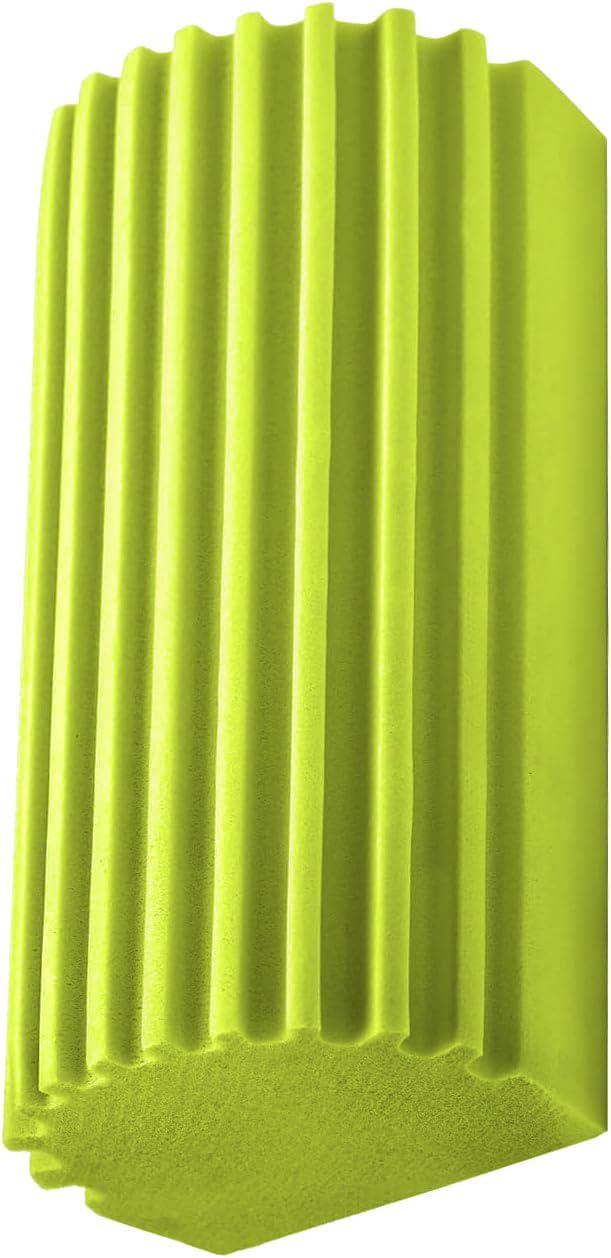
Green Sponge Duster, Reusable Household Cleaning Sponge Tool for Blinds, Floorboards, Fan Blades
-
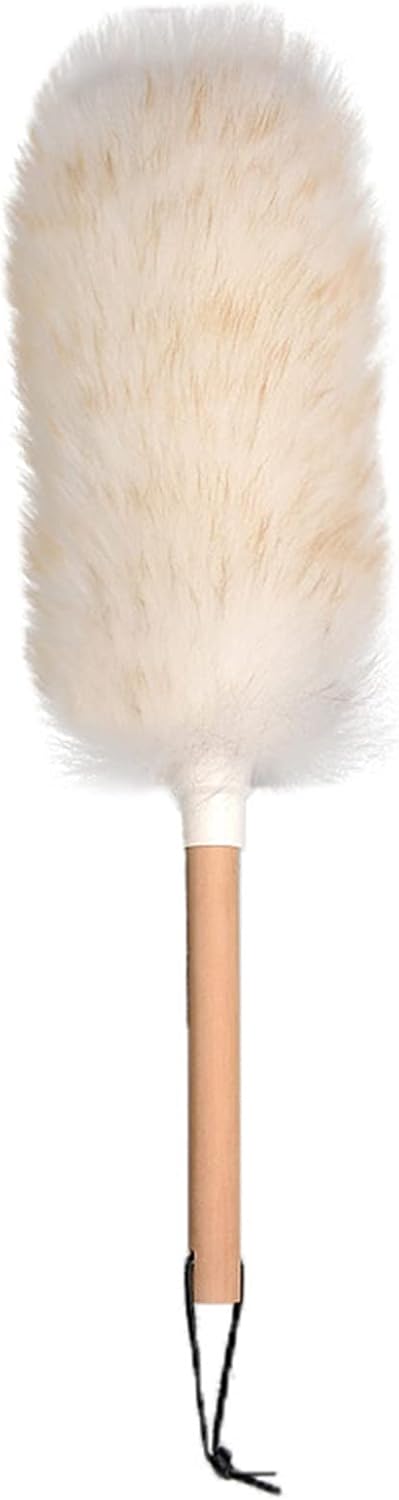
Feather Duster with Wood Handle, Blinds Cleaner Purifier, Brush Cleaning Tool, Lambswool Dusters for Cleaning Vehicles, Office and Housework Dusting 17.7 inches ( Pack of 1)